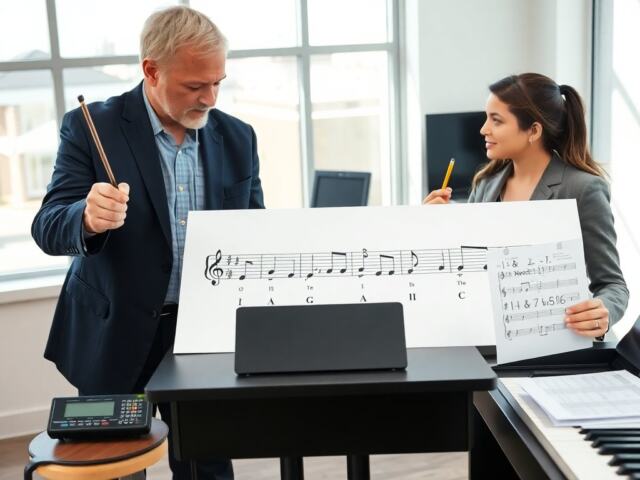
A singer can find limits and strengths with a vocal range tester. The tester measures the lowest and highest notes a singer can sing. The tester helps a singer choose songs, set practice goals, and avoid strain. This guide shows clear steps to use a vocal range tester and to act on results.
Key Takeaways
- A vocal range tester helps singers identify their lowest and highest singing notes, enabling better song selection and practice planning.
- Using an online vocal range tester involves singing along with reference pitches while the tool records your vocal limits accurately.
- Interpreting tester results includes understanding note ranges and using them as guides to estimate voice type and comfortable singing zones.
- To improve vocal range test accuracy, perform tests in quiet settings with good microphones, avoid fatigue, and cross-check results on multiple days.
- Regularly repeat vocal range testing to track progress, set targeted exercises, and consult a voice teacher for technique corrections if needed.
What A Vocal Range Tester Is And Why It Matters For Singers
A vocal range tester plays tones and records sung pitches. The tester maps notes to octaves. Many testers run in a browser or as an app. Singers use a vocal range tester to learn range size and comfortable tessitura. The tester also flags break points between chest and head voice. A singer who knows range picks songs that fit and reduces vocal strain. Choir directors and teachers use a vocal range tester for placement and lesson planning. The tool gives objective data that a singer can track over weeks.
How To Use An Online Vocal Range Tester — A Step‑By‑Step Walkthrough
Open a reliable site or app that offers a vocal range tester. Read the brief instructions on the page. Allow the browser or app to use the microphone. Start with a neutral posture and relaxed throat. Tap the start button so the tester plays a reference pitch. Sing the pitch clearly into the mic until the tester registers it. Continue as the tool steps up or down by semitones. Stop when the tester shows the lowest and highest detected notes. Save or note the result. Repeat the test after warmups to confirm accuracy. Track results across days to see real change.
How To Read And Interpret Your Test Results — Notes, Octaves, And Voice Type
The tester lists the lowest and highest note names and octaves. The tester may also show a piano keyboard or staff. Translate the notes into a range like A2–C5. Use the range to estimate voice type, but treat it as a guide. For example, a typical soprano range might read C4–C6. A baritone might read A2–A4. The tester cannot alone define fach or comfort zone. A singer should note where singing feels easy and where strain starts. The comfortable zone helps pick repertoire and key choices. Teachers use range plus timbre and passaggio to assign parts.
Common Accuracy Limitations And How To Improve Your Test Results
Background noise distorts the tester reading. Poor microphone quality lowers detection accuracy. Fatigue and illness shrink range temporarily. Auto-tune effects on the device can mask true pitch. To improve accuracy, choose a quieter room and a better mic. Rehydrate and rest the voice before testing. Disable any pitch-correction software on the device. Use multiple testers to cross-check results. Repeat the test on different days and average the extremes. Log the method and conditions so the singer can compare like with like.
Smart Next Steps After Testing: Exercises, Repeating Tests, And When To See A Teacher
Use the test results to set specific practice targets. If the tester shows a weak high end, include ascending sirens and gentle head-voice slides. If the low end feels thin, add vocal fry work and low chest resonance drills. Repeat the vocal range tester weekly for four weeks to watch progress. A singer should scale exercises in small, safe steps. If the tester shows sudden drops or pain occurs, stop and rest. A teacher or speech‑trained coach can assess technique, find passaggio issues, and set a corrective plan. A teacher also verifies test results and designs daily exercises that match the singer’s recorded range.