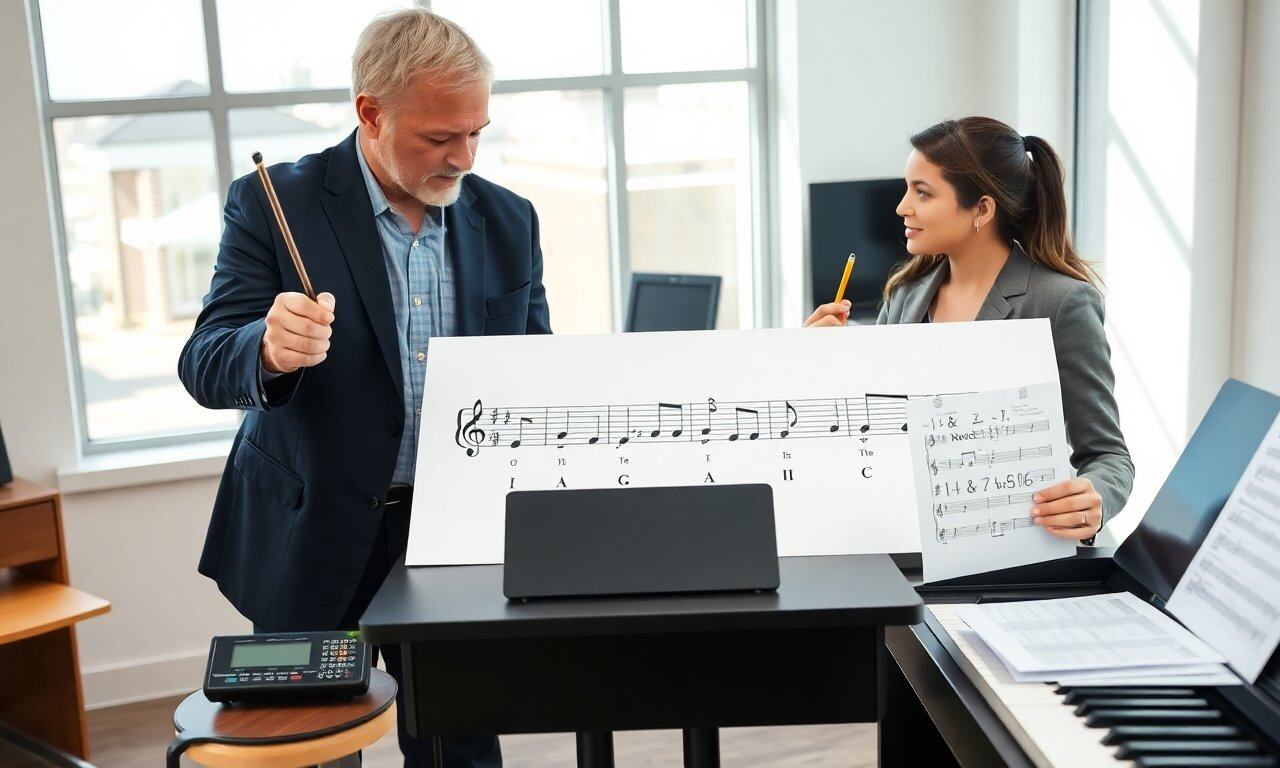
types of music notes define rhythm and pitch. This guide explains basic values, dotted notes, ties, rests, and reading cues. It uses clear examples and simple practice steps. The reader will learn to count, see, and play note values. The text stays direct and practical to speed learning.
Key Takeaways
- Types of music notes indicate rhythm and pitch, with whole, half, quarter, eighth, and sixteenth notes having fixed beat lengths to guide timing.
- Dotted notes and ties modify note duration by adding length or combining notes, while triplets divide beats into three equal parts for varied rhythms.
- Rests represent silence with specific durations, and counting rests accurately is essential for maintaining timing and ensemble coordination.
- Musicians use visual cues like noteheads, stems, flags, beams, and accidentals to quickly read and interpret types of music notes within the context of time and key signatures.
- Practicing sight-reading and recognizing rhythmic patterns enhances the ability to read types of music notes efficiently and maintain steady tempo during performance.
Basic Note Values And How Long They Last
Whole notes last four beats in common time. Half notes last two beats. Quarter notes last one beat. Eighth notes last half a beat. Sixteenth notes last a quarter beat. When a musician sees these types of music notes, they assign fixed beat lengths. A whole note shows a hollow notehead with no stem. A half note shows a hollow notehead with a stem. Quarter, eighth, and sixteenth notes show a filled notehead. Eighth notes use one flag or one beam. Sixteenth notes use two flags or two beams. The musician counts steady pulses and matches the note duration to the beat. Teachers often use metronomes to lock tempo and clarify how each of these types of music notes fit into a measure.
To internalize these lengths, students practice subdividing beats aloud: say “one-and-two-and” for eighths and “one-ee-and-a” for sixteenths, tapping a steady pulse while vocalizing subdivisions. Exercises that alternate between long and short values help build control—for example, hold a whole note across four beats, then play four quarter notes across the same span. On melody instruments, play single-note lines that change only by note value so the ear learns duration independently from pitch. On keyboard or percussion, clap the rhythm first, then add the instrument. Counting methods should be matched to the time signature: in cut time or 6/8 the beat unit shifts, so the same printed types of music notes may feel different in pulse.
Dotted Notes, Ties, And Common Subdivisions (Triplets)
A dot adds half the original value to a note. A dotted half note lasts three beats in 4/4 time. A dotted quarter lasts one and a half beats. A tie connects two notes and combines their durations. A tied note across a bar holds sound without rearticulating. Triplets split a beat into three equal parts. A set of eighth-note triplets places three notes where two would normally sit. Musicians use these types of music notes to change pulse and phrasing. Teachers show dotted patterns slowly and then increase tempo. Players count “one-and-two-and” or “one-trip-let” to place triplets accurately.
Practical reading tips: visually, a dotted note shows a single dot to the right of the notehead; multiple dots add progressively smaller divisions (a second dot adds half of the first dot’s value). Ties look like curved lines connecting noteheads and should be read as a single sustained sound whose total duration equals the sum of the tied values. For triplets, look for the bracket or small “3” above beamed groups—this indicates three equal notes in the time of two of the same division. Rhythm drills that mix dotted values, tied notes, and triplets train the brain to switch subdivision schemes quickly: practice one bar of dotted rhythms followed by one bar of triplets, then alternate. When learning new passages, mark the beats and write tiny numbers for subdivision under the staff to make the durations of these types of music notes explicit.
Rests: Types Of Rests And How To Count Silence
A rest marks silence and shows how long a musician must not sound. A whole rest shows silence for four beats. A half rest shows silence for two beats. A quarter rest shows silence for one beat. Eighth and sixteenth rests show shorter silences. A dotted rest extends silence by half the rest value. Musicians count rests the same way they count notes. One counts beats aloud or in the head to keep time during rests. Conductors and band leaders often use rallies to cue returns after long rests. Understanding rests helps the reader hear phrasing and keep ensemble precision when they encounter these types of music notes.
Counting rests accurately requires internal pulse and sometimes active subdivision: for a measure with an off-beat entrance, count subdivisions silently so you can come in precisely. For long or complex rests, players often prepare by marking rehearsal letters or bar numbers and by counting forward from the last sounded beat. Practice exercises include clapping the rests while another part plays the rhythm, and sight-reading pieces with frequent rests so the eye learns to track upcoming entries. Learn the visual shapes too—the whole rest hangs from the fourth line, while the half rest sits on the third line—so you can instantly read type and duration without verbal counting. In ensemble settings, listening for the conductor’s preparatory beat and for other parts’ cues prevents missed entries and keeps the silence as musical as the sounding notes.
Reading Notes Fast: Visual Cues, Accidentals, Time Signatures, And Practice Strategies
A musician scans the staff for clef, key, and time signature first. The time signature shows the beat unit and the number of beats per measure. The key signature shows which accidentals apply across the bar. Accidentals alter pitch for single notes or for an entire measure. Visual cues like beaming, stem direction, and grouping show rhythmic grouping at a glance. The reader learns to spot common patterns and predict likely note values. The student practices sight-reading short phrases to improve speed when parsing these types of music notes.
To read notes quickly, develop a consistent pre-scan routine: check clef, key signature, time signature, any tempo or expression markings, then glance for repeating rhythmic or melodic motifs. Look for beaming that groups eighths and sixteenths into beats—this shows how to feel the pulse without counting every individual flag. Watch for accidentals and remember they apply only for the remainder of the measure unless canceled; mark tricky accidentals lightly to avoid surprise. Practice strategies that build speed include daily short sight-reading (one page or a few exercises), rhythmic clapping before playing, and slow practice that gradually accelerates with a metronome. Use pattern recognition: many passages are combinations of a few common types of music notes arranged in predictable ways—scales, arpeggios, and repeated rhythmic cells. Recording practice sessions and reviewing where reading breaks down helps target weak spots. Over time, these habits reduce the need to decode every symbol and increase the ability to play accurately at tempo.