A single country playlist can jump from a banjo tune to a glossy chart hit. Both sit among the types of country music: classic, outlaw, Americana, western swing and pop country, each with different roots and a different delivery.
Country is a regional voice tradition among many, and traditional singing styles around the world give the wider context for how folk roots become separate genres.
Why country is not a single sound
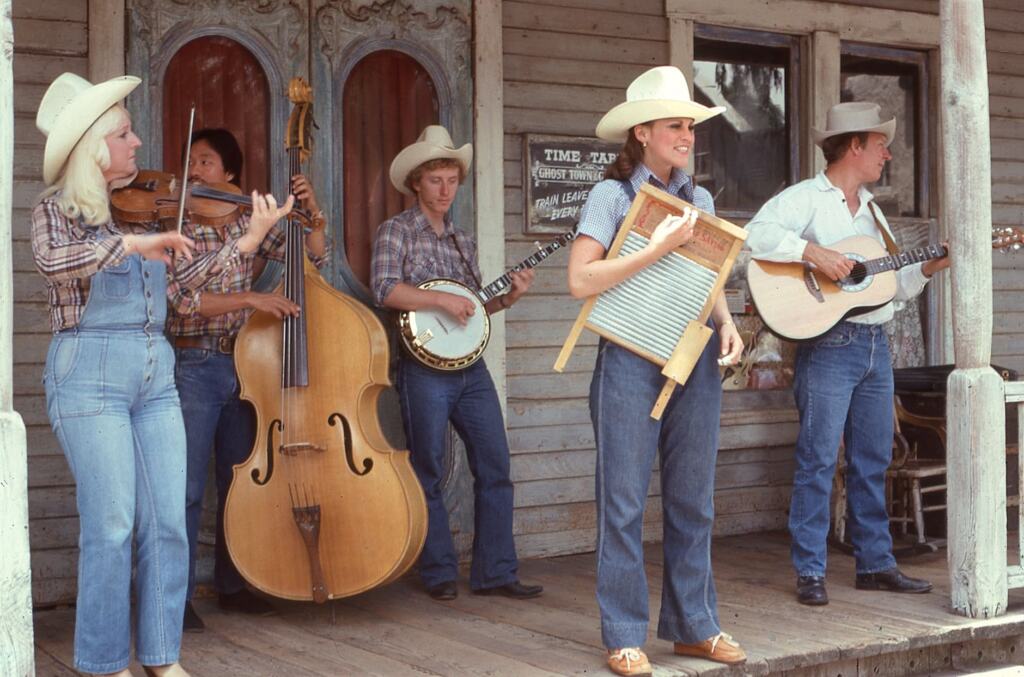
The usual starting error is to assume country has always sounded the same. Song Academy says country music originated from blues, church music and several forms of American folk music in the 1920s. Another overview describes the early 1920s blending of blues, gospel and folk from Appalachia. Players of that period used acoustic instruments: the guitar, the banjo and the accordion, plus the European harmonica and violin.
A genre built from several sources has room for several styles. Some styles stay close to the older acoustic roots, while others pull in outside influences. Listeners who want to follow the blues strand of those roots can read Types Of Blues Music: A Listener’s Guide To Key Styles And Their Sound (2026).

The main styles at a glance
The table below separates the labels that most often get blurred. Read it as a contrast between where each style sits in country’s story and what the name signals, not as a set of rigid genre walls.
| Style | Root or label | Representative artists | What it tells you |
|---|---|---|---|
| Classic country and honky-tonk | Older hits from the 1950s-1980s; described as the cowboys who started the genre | Hank Williams, Johnny Cash, Merle Haggard, George Strait, Tanya Tucker, Reba | Start here for the founding generation and its catalogue. |
| Outlaw country | Called the outlaws of country music | Willie Nelson and Waylon Jennings, named as forefathers | The label marks artists who stand apart from the founding line. |
| Americana and alt-country | A blend of music styles, grouped with Red Dirt | Chris Stapleton, Jason Isbell, Sturgill Simpson (second wave) | Expect a meeting ground rather than a single sound. |
| Pop country (bubblegum) | Pop artists with a slight southern drawl | Taylor Swift is named as the starting point | The vocal accent, not the production, is the country signal. |
Style labels, artists and the 1950s-1980s span come from B985’s guide to country sub-genres and a classification essay on country music.
Outlaw versus traditional country
Outlaw and traditional country are not two eras that replaced each other. They are two ways of relating to the same tradition. B985 describes classic country artists such as George Strait and Hank Williams as the ones who started the genre, and the classification essay says classic country plays older hits from the 1950s-1980s by artists like Hank Williams and Johnny Cash. Traditional country, which this map pairs with honky-tonk, is therefore the founding line and its catalogue.
Outlaw country is defined against that line. B985 calls its artists the outlaws of country music, with Willie Nelson and Waylon Jennings as the forefathers. The name carries the difference: classic country is the original body of work, and outlaw is the label for artists who stood outside it.
The best way to hear the contrast is to play a Hank Williams record and then a Waylon Jennings record, and listen to how each singer handles the same kind of song. Treat the label as a guide to lineage, and let your own ears judge the sound.
What Americana covers
Americana is not a rebranded country but a grouping. B985 lists Red Dirt, alt-country and Americana together and calls them an interesting blend of music for the genre. That makes Americana the right label when a record draws on several country-adjacent styles and fits none of them cleanly.
The same guide names Chris Stapleton, Jason Isbell and Sturgill Simpson as part of the second wave. If you want a practical entry point, begin with those names. They show the range inside the label, and they give you a reference point when a streaming service tags a track as Americana or alt-country.
Pop country and the crossover question
Pop country is the style most often accused of not being country at all, but its pop leanings are well documented. Song Academy notes that contemporary country music can sound similar to pop, and that commercial pop influence has shaped the genre since the 2000s. A Song Academy example is Gabby Barrett’s “I Hope”, which it describes as a blend of pop music with guitars that remind you of the traditional country genre, and which it reports as the most-listened country song of 2020.
Several labels sit under this heading, so it helps to separate them:
- Bubblegum country: B985 defines it as pop artists with a slight southern drawl, and says it started with Taylor Swift.
- Country pop: the classification essay describes a blend of rock, pop and country, and cites a collaboration between Chris Stapleton and Justin Timberlake.
- Modern country’s reach: the same essay says modern country became popular worldwide in the 1990s because of artists like George Strait and Toby Keith.
Chris Stapleton appears both in the Americana second wave and in a country-pop collaboration, so an artist can move between labels. Judge a pop-leaning track by two checks: whether the guitars still sound traditional, as in Barrett’s song, and whether the vocal keeps a southern accent, as in the bubblegum definition. Pop-sounding production alone does not settle it.
Western swing and the instruments that changed the sound
Western swing entered country in the 1930s-40s. The overview on Scribd says the genre kept evolving then, with elements from western swing and film soundtracks added. That makes it a deliberate widening of the sound well before pop country.
Instrumentation is the clearest way to date a country record, so here is the instrument list in order of arrival, based on Song Academy’s history:
- 1920s acoustic core: guitar, banjo, accordion, harmonica and violin, the instruments the early country musicians used.
- 1938 electric guitar: Song Academy says electric guitar was used in country music for the first time in 1938.
- 1950s drums: musicians started to have a drummer only from the 1950s.
A recording with electric guitar and drums was made after those arrivals, while a record built only on the acoustic list leans toward the early sound. Instrument-by-instrument breakdowns for each modern style are beyond what these sources support, so use the timeline as a dating tool rather than a style guide.
Choosing where to start
Match the starting point to what you want from the music. For the founding generation, begin with the classic names in the table. For a record that stands apart from them, try Willie Nelson or Waylon Jennings. For a genre-blending listen, try the Americana second wave. For chart-friendly accessibility, begin with the pop country examples. Readers who like following pop-leaning chart sounds through other periods can compare with 80s Music Genres: The Definitive Guide To The Sounds That Shaped A Decade.
Frequently asked questions
| Question | Answer |
|---|---|
| Where did Red Dirt country come from? | Red Dirt originated in Oklahoma, and artists like Bob Childers helped grow its sound, according to a classification essay on country music. |
| What was the Nashville sound? | In the 1950s it turned country music into a lucrative industry centred in Nashville, Tennessee, according to this overview of country music. |
| What is stadium country? | B985’s sub-genre guide says it started back in the 1990s with Garth Brooks. |