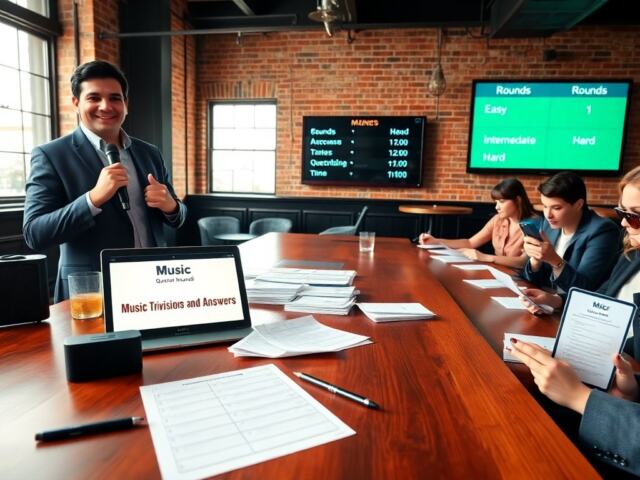
Classical music trivia appears in this pack to spark curiosity and friendly competition. The pack includes 25 questions across three difficulty levels and is designed so each round teaches something new as well as tests memory. It serves adults and teens who like music facts, history, and listening challenges. The questions suit casual players and serious fans alike, with a mix of name-that-piece, composer identification, dates, form, and short listening prompts. The format fits bars, classrooms, and living rooms and can be adapted for online play, pub quizzes, or classroom drills.
Key Takeaways
- Classical music trivia engages both casual players and serious fans with 25 questions across easy, medium, and hard levels.
- The trivia pack enhances learning by including short explanations and fascinating backstories for each answer so players leave with context as well as facts.
- Hosts can customize gameplay with timed rounds, bonus questions, and diverse formats like audio clips, picture prompts, and conductor identification to boost fun and challenge.
- Including well-known composers like Beethoven and Mozart, the trivia pack naturally incorporates essential classical music knowledge while also highlighting lesser-known composers and techniques.
- Effective hosting tips—such as using good sound systems, mixing question types, and offering prizes—help create memorable trivia nights and keep players returning.
- Explaining answers and encouraging discussion during trivia rounds deepens understanding, sparks conversation about interpretation, and maintains player engagement through short anecdotes and listening notes.
How To Use This Trivia Pack — Rules, Formats, And Difficulty Levels
This section explains how to use the classical music trivia pack and suggests simple, flexible rule sets. Before play, announce scoring: one point for correct answers, bonus points for perfect audio IDs, and deduction policies if desired. Teams answer questions in turn or simultaneously depending on your format choice. Hosts can run straight quiz rounds, toss-up buzzer rounds, or head-to-head brackets for a tournament feel. The pack divides questions into Easy, Medium, and Hard so you can pace the evening—start with a warm-up of easy items, move into listening and medium-level identification, and finish with challenging date/key/analysis questions. Easy questions test basic recognition and common knowledge; Medium questions require recall of composer, form, or characteristic motifs; Hard questions demand precise dates, keys, historical context, or knowledge of lesser-known composers and techniques.
Choose timed or untimed rounds to fit your audience: timed rounds (30–60 seconds per question) add energy and push quick recall; untimed rounds allow for discussion, which is ideal for educational settings. Use buzzer systems, mobile apps, or simple hand-raise rules depending on venue size. For audio-based rounds, pre-cue clips of 10–30 seconds and test them in advance for volume and clarity. Consider alternative formats: multiple choice for beginner-friendly play, picture rounds showing portraits or manuscript excerpts, and pass-the-question rounds where teams can trade questions for partial credit. Include a small debrief after each round—read the short explanation provided with each answer to reinforce learning and spark conversation. Finally, decide how to handle ties (sudden-death question, bonus audio clip, or a short performance challenge) and whether to award themed prizes or recognition to encourage repeat attendance.
25 Essential Trivia Questions, Organized By Difficulty
The pack lists 25 classical music trivia questions arranged to build skill and interest. The section groups questions by difficulty so players can progress from recognition to deeper knowledge. Players typically start with Easy and move to Hard; you can also mix difficulties if you want balanced rounds. Each question aims to teach and entertain, and every answer in this pack includes a concise explanation to provide context, performance notes, or historical background.
Answers And Short Explanations For Each Question
- Who wrote the “Fifth Symphony” often called the “Symphony of Fate”?, Beethoven. He wrote it between 1804 and 1808. The famous four-note motif opens the work and is often discussed as an example of motivic development.
- Which composer wrote “The Four Seasons”?, Vivaldi. He wrote violin concertos that represent seasons. The concertos are examples of program music with descriptive passages that suggest birdsong, storms, and icy winds.
- Who composed the opera “The Magic Flute”?, Mozart. He wrote it in 1791. The opera blends spoken dialogue with singspiel elements and contains both comic and serious Masonic-influenced themes.
- Which composer lost hearing yet continued to compose?, Beethoven. He completed late symphonies after he lost hearing. Those late works are often praised for their structural innovation and emotional depth.
- Who wrote the ballet “Swan Lake”?, Tchaikovsky. He wrote it for the Imperial Ballet in 1875. The score is noted for its lyrical themes and strong orchestral color that supports choreography.
- Which composer wrote “Boléro”?, Ravel. He wrote it as a single-movement orchestral piece. Its hallmark is a steady ostinato rhythm and a long, gradual crescendo across varying instrumental colors.
- Which composer wrote the “Moonlight Sonata”?, Beethoven. He dedicated it to his pupil Countess Giulietta. The popular nickname reflects the piece’s contemplative first movement and its evocative mood.
- Who wrote the Requiem left unfinished at death?, Mozart. His student Süssmayr completed parts. The work’s dramatic choral writing and mysterious circumstances around its composition add to its appeal.
- Which composer wrote the “Ride of the Valkyries”?, Wagner. He included it in the opera “Die Walküre.” The passage is frequently excerpted and used in popular culture for its vivid orchestral power.
- Who composed “Claire de Lune”?, Debussy. He wrote it as part of the “Suite bergamasque.” The piece is known for its impressionistic harmonies and delicate, luminous piano writing.
- Which composer is linked to the term “baroque” and wrote many concertos?, Vivaldi. He worked at an orphanage in Venice. His concertos often showcase virtuosic solo lines and clear ritornello form.
- Who wrote “The Planets” suite?, Holst. He wrote movements named for planets except Earth. Each movement has a distinct character—Mars, for example, conveys martial energy while Venus suggests peace.
- Which composer created twelve-tone technique?, Schoenberg. He used serial methods to structure music. The technique reorganized pitch relationships and influenced many 20th-century composers.
- Who composed the opera “La Traviata”?, Verdi. He wrote it in 1853. The opera is famed for its melodic power and for addressing contemporary social issues of its time.
- Which composer wrote the cello suite No.1 in G major?, Bach. He wrote six solo cello suites. These works are cornerstone repertoire for cellists and are valued for their architectural clarity and expressive dance movements.
- Who wrote the trumpet concerto in E-flat major that young players study?, Haydn. He wrote it in 1796. The concerto is celebrated for its lyrical second movement and its bright, classical style.
- Which composer wrote “Pomp and Circumstance” marches?, Elgar. Schools use the first march at graduations. The marches are ceremonial and make frequent use of bold brass and sweeping themes.
- Who composed the symphony known as the “New World Symphony”?, Dvořák. He wrote it during a stay in the United States. The work blends Czech melodic character with influences Dvořák encountered in America.
- Which composer used the pseudonym “The Bad Pianist” for jokes?, Liszt. He often played virtuosic and theatrical piano pieces. Liszt’s persona and showmanship helped establish the modern piano recital tradition.
- Who wrote the opera “Carmen”?, Bizet. He wrote it in 1875 and died shortly after its premiere. The opera’s memorable tunes and realistic characters made it a lasting staple of the repertory.
- Which composer wrote the chorus “Hallelujah” in an oratorio?, Handel. He wrote “Messiah” in 1741. The oratorio’s mix of solo and choral writing includes famous choruses that remain concert highlights.
- Who wrote “Gymnopédies”?, Satie. He wrote minimalist piano pieces in the late 19th century. Their spare textures and gentle tempos influenced later composers interested in simplicity and atmosphere.
- Which composer is known for the piece “Adagio for Strings”?, Barber. He adapted it from a string quartet. The work is frequently performed in solemn contexts and is noted for its poignant melodic line.
- Who wrote the piano piece “Etudes” that changed piano technique?, Chopin. He wrote many etudes that taught technique and expression. Chopin’s etudes combined technical challenges with deep musicality, making them concert staples.
- Which composer wrote the opera “Madame Butterfly”?, Puccini. He wrote it in 1904. The opera’s emotional arias and dramatic pacing made it a popular and frequently performed work.
Each answer includes a short note. The notes explain context, form, or dates where helpful and often point to listening cues—such as a famous motif, the overall character of a movement, or a historical anecdote—to help players remember and appreciate each work. Players gain quick facts after each question that can be used as teaching points or post-round discussion prompts.
Fascinating Backstories And Little-Known Facts About Famous Pieces
This section lists backstories and facts for famous works from the classical music trivia pack to add color and unexpected detail to your rounds. Short anecdotes and interpretive notes help make the music feel alive, whether you read them aloud after a question or print them on answer keys for later discussion.
Beethoven reused themes across works, transforming short motifs into large-scale structures; this demonstrates how motivic development can unify an entire composition. Vivaldi used program notes in “The Four Seasons” to describe bird calls and storms, effectively guiding listeners through narrative music. Mozart sometimes worked quickly under commission, writing movements in single bursts of inspiration, and he often copied and adapted material as needed to meet deadlines. Tchaikovsky revised ballets after premieres to improve pacing and orchestration and to suit dancers’ needs. Ravel based “Boléro” on a slow, repeating rhythm and specified a steady crescendo, offering a masterclass in orchestration and color. Debussy’s “Claire de Lune” evokes imagery and atmosphere through harmonic color rather than traditional thematic development.
Holst subtitled movements of “The Planets” with mythic or character-based associations and was careful to avoid claims of astrology dictating the music’s content. Handel composed “Messiah” rapidly and made use of earlier material, illustrating baroque practices of borrowing and reworking themes. Paganini’s extraordinary technique generated myths about supernatural assistance, while his caprices served both as virtuosic showpieces and pedagogical studies. Bach compiled many works for teaching and liturgical use, often arranging and reworking material across different contexts. These facts and historical notes make the classical music trivia more vivid; hosts can read one or two after each question, or use them as bonus content for higher-scoring teams.
Tips For Hosting A Memorable Classical Music Trivia Night
This section gives practical tips for a trivia night focused on classical music so your event runs smoothly and stays enjoyable for players of varying knowledge levels. Choose a venue with clear acoustics and a reliable sound system; small portable speakers can suffice for home or small-venue events, but test playback levels beforehand. Prepare printed answer sheets or a simple digital scoring form and ensure writing implements are available. Schedule time for music clips and for answers, keeping each clip short—10 to 30 seconds is usually enough—so rounds move quickly.
Play short clips to test listening skills and cue clips at low volume initially to challenge recognition, then replay at normal volume for confirmation. Mix question types—multiple choice, audio ID, fill-in-the-blank, picture rounds with composer portraits or manuscript excerpts, and short essay prompts for educational sessions—to keep things varied. Keep rounds short (6–10 questions) to maintain energy and allow time for explanations that deepen understanding. Invite a local musician or music student to provide brief commentary between rounds to enhance the experience and offer insight into performance practices.
Provide small prizes such as music-themed items or vouchers, or offer recognition like a rotating trophy or leaderboard to encourage return visits. Use themed snacks or decorations to boost atmosphere, and consider a dress-up night where teams adopt composer personas for added fun. Balance challenge and accessibility by mixing Easy and Hard questions in each round so newcomers aren’t discouraged and experts stay engaged. Collect feedback after the event (a quick paper or digital survey) to learn what worked and what to tweak—question pacing, audio quality, or prize structure. Finally, record score tallies to prepare a leaderboard for returning players and to tailor future nights to your audience’s preferred formats and difficulty levels.