1960s music genres set a new course for popular sound. The phrase “1960s music genres” denotes the main styles listeners heard on radio and in clubs. Historians point to six core types that drove fashion, politics, and studio practice. This guide names those styles and explains how each one changed what people heard and how artists worked.
Key Takeaways
- The phrase “1960s music genres” refers to six key styles—Rock, Pop, Soul, Folk, R&B, and Motown—that shaped the decade’s sound and cultural impact.
- 1960s music genres innovated with new recording techniques, blending styles like soul vocals in rock and folk lyrics in pop, creating a fresh, connected musical landscape.
- Regional scenes, such as the British Invasion, garage bands, and psychedelia, expanded 1960s music genres with distinct local flavors and experimental studio effects.
- Subgenres emerged within the major 1960s music genres, allowing fans and musicians to explore diverse moods and scenes, keeping the decade’s music varied and vibrant.
- 1960s music genres greatly influenced later music production, songwriting with social themes, and the rise of album-focused releases, shaping popular culture and political engagement.
- Later styles like punk, hip-hop, and indie pop drew inspiration directly from 1960s music genres, carrying forward its musical ideas and studio innovations.
The Big Six: Rock, Pop, Soul, Folk, R&B, And Motown
1960s music genres included six main styles that shaped the decade. Rock grew from early rock ‘n’ roll and surf, and it pushed louder guitars and youth identity. Pop focused on catchy hooks and studio polish. Soul mixed gospel vocal power with secular themes, and it gave singers new emotional weight. Folk used acoustic guitars and clear storytelling, and it brought protest songs into the charts. R&B kept dance rhythms and strong backbeats, and it fed many rock records. Motown combined pop craft with tight rhythm sections, and it built a hit-making factory in Detroit.
Each of these 1960s music genres had distinct musical building blocks. Rock emphasized guitar riffs, driving drums, and amplified sound; pop emphasized short, hook-driven arrangements crafted for radio; soul foregrounded call-and-response vocals, horn arrangements, and emotional intensity; folk prioritized lyric clarity, fingerpicked guitars, and community-oriented performance; R&B anchored songs in groove and rhythm that encouraged dancing; Motown married these elements into a refined, repeatable production model that aimed for broad crossover appeal.
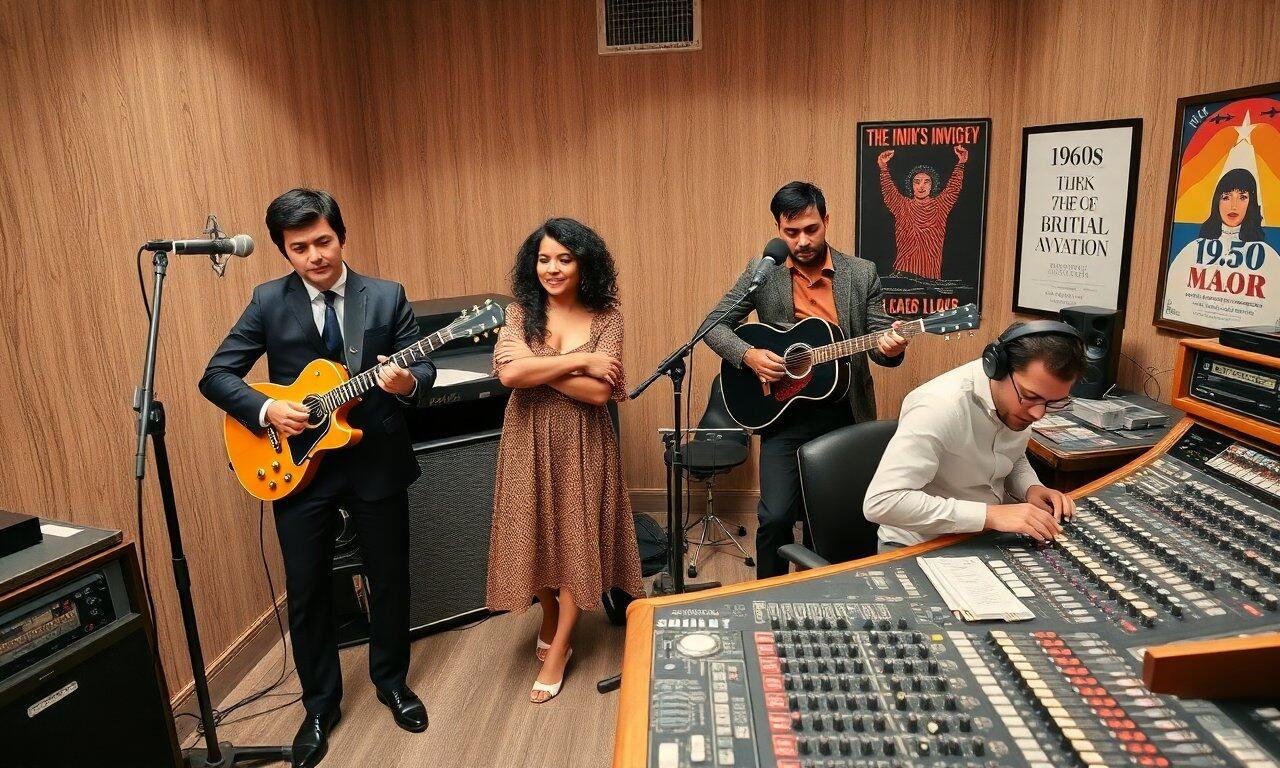
Behind the artists, producers and session musicians played a central role in shaping the sound of 1960s music genres. Studio practices like live rhythm tracking, close vocal takes, and standardized arrangements helped create an identifiable sonic signature for many hits. Independent songwriters and in-house writing teams supplied material tailored to each style’s audience. Radio program directors and jukebox operators then translated these studio products into chart success by deciding which records reached listeners most often.
Social context also informed these genres. Folk and soul both took on political content as civil rights and anti-war sentiment moved into the mainstream; pop and Motown often presented optimistic, crafted images that could cross racial and generational lines; rock and R&B became outlets for teenage rebellion and dance culture. These differing functions helped the phrase “1960s music genres” signify not only sound but also the decade’s varied cultural roles for music.
Regional Scenes, Subgenres, And Emerging Styles (Garage, Psychedelia, British Invasion)
Regional scenes fed the main 1960s music genres and created local flavors. British bands brought the British Invasion sound to U.S. charts. They exported jangly guitars, strong melodies, and new star images. Garage bands in American towns played raw, guitar-driven songs. They used simple arrangements and urgent delivery. Psychedelia appeared later and used studio effects, minor keys, and surreal lyrics. It changed how musicians used the studio as an instrument.
Beyond national labels, regional production aesthetics mattered. Southern soul developed a grittier, church-influenced voice; northern pop scenes emphasized harmonies and tight band interplay; coastal folk communities fostered open mic and coffeehouse circuits that promoted lyric-based songwriting; Midwestern and West Coast hubs cultivated strong band cultures and independent venues. Local record shops, community radio, and teen clubs helped incubate subgenres by giving young bands a first audience.
Garage rock provided a template for do-it-yourself music-making: inexpensive instruments, basic amplifiers, and resolute energy. Psychedelia brought extended improvisation, modal harmony, and studio experiments—tape loops, backward recording, phasing, and unusual instrumentation—to mainstream records. The British Invasion not only exported sound but also demonstrated how a concentrated national scene could influence global taste, encouraging other countries to develop their own responses and hybrids.
Subgenres also formed within each major category. Soul split into regional variants that emphasized different vocal styles and production values; folk divided into revivalists who focused on traditional material and singer-songwriters who foregrounded personal composition; rock fractured into folk-rock, blues-rock, and pop-rock branches. These offshoots allowed musicians to specialize and fans to find niches, creating a layered ecosystem that made the phrase “1960s music genres” rich with internal diversity rather than a single, monolithic sound.
How 1960s Genres Influenced Later Music — Production, Politics, And Popular Culture
1960s music genres changed how later artists recorded and wrote songs. Producers used multi-track recording and overdubs to build richer arrangements. Bands used electric instruments and new amplification. Those tools led to modern studio practice and album-focused releases. Songwriters adopted direct language and political themes. Folk and soul artists placed social issues in the foreground. Musicians then used songs to address civil rights, war, and labor.
Technically, many production techniques that became standard in later decades were refined in the 1960s. Close vocal miking, dedicated rhythm sections, overdubbed harmonies, stereo mixing choices, and creative use of effects all became part of a studio vernacular. Engineers learned to create larger-than-life sounds and to treat the studio itself as a compositional tool. These innovations influenced how albums were sequenced and how producers approached sonic identity for artists in the 1970s and beyond.
Culturally, the 1960s demonstrated how music could serve as a platform for political engagement and social identity. Protest songs, soul records addressing inequality, and an increasingly visible youth culture linked music to movements and public debate. As music became more visibly connected to fashion, film, and advertising, performers served as icons whose images were as potent as their songs. That entanglement between music and popular culture became a blueprint for later marketing and media strategies.
Musically, the legacy of 1960s music genres is visible in both technique and attitude. Punk bands later drew on garage rock’s economy of means and confrontational simplicity; hip-hop producers and MCs took rhythmic emphasis and call-and-response elements from R&B and soul and repurposed them into new frameworks; indie and alternative scenes borrowed melodic directness and production choices first popularized by British Invasion and pop acts. Sampling, reinterpretation, and stylistic fusion all trace back to the 1960s habit of borrowing across scenes and reworking familiar elements in new contexts.
Finally, the decade’s influence extended into industry structure and audience expectations. The rise of the album as an artistic unit, the importance of producer-driven sound, and the idea that a genre can carry political or social meaning all emerged in this period. Those changes ensured that the phrase “1960s music genres” describes not only a set of sounds but a foundational moment when music production, distribution, and cultural role were all reshaped—setting patterns that later artists, labels, and audiences would continue to develop.